
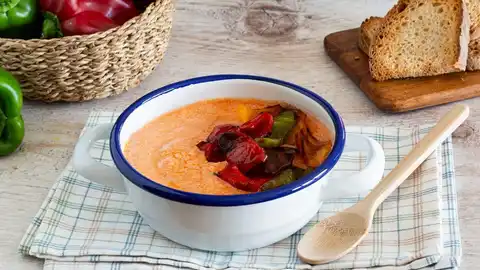
Fërgesë (pronounced in English as fehr-JEH-zeh) is a traditional Albanian dish, particularly from the capital Tirana, made with fried yellow, red, and green peppers, tomato pulp, and cheese. It's a simple yet delicious dish, perfect as a main course, with toasted bread, for any lunch or dinner.
Typically made with a local cheese similar in appearance to Greek feta, but softer in texture and more acidic in flavor, fergesë can also be prepared, as in our case, with a mix of ricotta, feta, and goat cheese. The result is a dish with an intense flavor and irresistible aroma, ideal even for vegetarian guests.
Fërgesë's Origins and History
Fërgesë is a traditional dish from central Albania, particularly associated with the areas around Tirana and Elbasan, and its origins are deeply tied to the country's rural cooking traditions. The name is believed to come from the Albanian verb fërgoj, meaning "to fry" or "to sauté," reflecting the way the dish is prepared. Historically, fërgesë was a humble, home-style recipe made with simple local ingredients such as peppers, tomatoes, and white cheese, often cooked slowly in clay dishes. Over time, it became one of Albania's best-known comfort foods, with both vegetarian and meat-based versions developing across different regions.
How to Make Albanian Fërgesë
Tirana and Elbasan
To prepare the fergesë, start by cleaning the peppers: remove the stalk, the filaments and the internal seeds, then cut the pulp into pieces that are not too small.
Heat plenty of oil in a large pan and fry the peppers for a few minutes, until they are soft and lightly browned.
Drain the peppers on a plate lined with kitchen paper to remove excess oil.
The details that count
Take two tablespoons of the oil used to fry the peppers and pour them into a saucepan, then add the blended peeled tomatoes, mix and cook for about 10 minutes over low heat. Once cooked, add a pinch of salt and, if you like, some fresh or dried chili pepper for a pleasant spicy kick.
Also add the crumbled feta, goat cheese and ricotta.
Let the cheeses melt, mixing carefully, then continue cooking for 5-6 minutes, covering with a lid or splash guard if necessary.
What happens next
At this point, add 2/3 of the previously fried peppers, keeping the rest aside for the final decoration.
Mix until the peppers are perfectly incorporated into the tomato and cheese cream, then divide everything into serving dishes and decorate with the reserved fried peppers.
The fergesë is ready: bring it to the table and enjoy it, accompanied by slices of toasted bread. Enjoy!
The part worth remembering
Storage InstructionsFergesë is excellent eaten fresh, but if you have any leftovers, you can store them in the refrigerator, tightly closed in an airtight container, for up to 1 day.
Over time, it became one of Albania's best-known comfort foods, with both vegetarian and meat-based versions developing across different regions.
Reading the wider picture
Dairy and bakery work depends on variables that shift daily: humidity, temperature, the age of the flour, the mood of a starter. Small differences compound quickly.
The short version
- Fërgesë (pronounced in English as fehr-JEH-zeh) is a traditional Albanian dish, particularly from the capital Tirana, made with fried yellow, red
- Fërgesë is a traditional dish from central Albania, particularly associated with the areas around Tirana and Elbasan
- To prepare the fergesë, start by cleaning the peppers: remove the stalk, the filaments and the internal seeds, then cut the pulp into pieces that are not too small
- Heat plenty of oil in a large pan and fry the peppers for a few minutes, until they are soft and lightly browned
- Take two tablespoons of the oil used to fry the peppers and pour them into a saucepan, then add the blended peeled tomatoes, mix and cook for about 10 minutes over low heat
The numbers worth knowing
- Let the cheeses melt, mixing carefully, then continue cooking for 5-6 minutes, covering with a lid or splash guard if necessary
- Fergesë is excellent eaten fresh, but if you have any leftovers, you can store them in the refrigerator, tightly closed in an airtight container, for up to 1 day
The bottom line
How this plays out in the bakery case will take time to become clear. For now it is a development worth following rather than judging.