
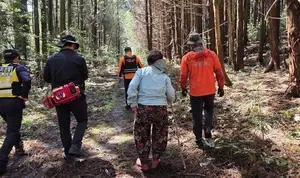
Spring hunt for wild bracken lures foragers into wild, driving rise in lost hikers, snakebites
The annual foraging season for wild bracken fiddleheads, locally known as gosari, is now in full swing on Jeju Island.
But the seasonal tradition has been marred by a string of accidents, including cases of people going missing as well as snakebites.
Jeju Island
On Sunday, a woman in her 60s was rescued by fire authorities after becoming lost while gathering bracken on a forest trail in Pyoseon-myeon, Seogwipo, at around 11:32 a.m., according to the Jeju Fire and Safety Headquarters on Tuesday.
Snakebite incidents have also been reported, including a case in which a man in his 40s was bitten while collecting bracken in Jeju City at around 4 p.m. on Friday. He was taken to a hospital, though the injuries were not life-threatening.
Authorities said a total of 44 bracken-related incidents were recorded over the past three weeks -- 40 cases of lost persons and four injuries.
Fire and Safety Headquarters
Residents on Jeju Island have traditionally flocked to forests and fields between March and May to harvest wild bracken, which thrives in mild temperatures and frequent rainfall during this period. The plant's young stems are gathered in early spring for their tender texture, then blanched and dried for year-round use.
"I used some of the bracken I picked to make namul (edible greens) and sold the rest. I got about 60,000 to 70,000 won ($41-$48) for 600 grams," said Park, a 62-year-old resident of Jocheon-eup, Jeju City.
Gosari namul is a popular side dish in Korea known for its deep, earthy flavor and chewy texture, making it an essential ingredient in dishes such as bibimbap and yukgaejang, a spicy beef and vegetable soup.
March and May
With bracken season at its peak, not only locals but also tourists are joining in the hunt, embracing the activity as a unique travel experience. Social media has seen a surge in posts by younger foragers documenting their bracken-picking trips.
Authorities are responding to a rise in bracken-related accidents by installing more signboards and guide markers in dangerous areas, news reports said.
"Bracken usually grows in remote forests and fields, so people often lose their way when they focus too much on picking it. Before they realize it, they've wandered deeper into the woods and lost their sense of direction," a firefighter on Jeju Island told a local news outlet.
Reading between the lines
"It's best to go in groups rather than alone and to make sure your phone is fully charged before heading out."
I used some of the bracken I picked to make namul (edible greens) and sold the rest. I got about 60,000 to 70,000 won ($41-$48) for 600 grams.
Reading the wider picture
Fresh produce runs on seasons that ignore calendars, and most supply problems begin as nothing more complicated than weather in the wrong week.
The short version
- Spring hunt for wild bracken lures foragers into wild, driving rise in lost hikers, snakebites
- The annual foraging season for wild bracken fiddleheads, locally known as gosari, is now in full swing on Jeju Island
- The seasonal tradition has been marred by a string of accidents, including cases of people going missing as well as snakebites
- On Sunday, a woman in her 60s was rescued by fire authorities after becoming lost while gathering bracken on a forest trail in Pyoseon-myeon, Seogwipo, at around 11:32 a.m., according to the Jeju Fire and Safety Headquarters on Tuesday
- Snakebite incidents have also been reported, including a case in which a man in his 40s was bitten while collecting bracken in Jeju City at around 4 p.m. on Friday
The bottom line
How this plays out in the produce section will take time to become clear. For now it is a development worth following rather than judging.