
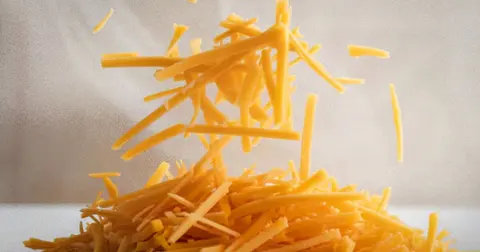
Rice cheese once had a bad reputation, but new research suggests rice protein could help create better-tasting, more sustainable vegan cheese alternatives.
We're just going to come out and say it: vegan cheese doesn't have the best reputation, and a lot of that is because of rice cheese. We're very sorry, but it's true.
Today, there are a myriad of dairy-free cheeses on offer, including artisanal creations and delicious store-bought alternatives. But 15 years ago, rice cheese was one of the main vegan options on the market alongside soy cheese. Rice cheese didn't melt very well, the texture was slightly gritty, and the flavor was bland.
Ontario and Canadian Light
So, of course, when new research raised rice as the answer to delicious vegan cheese, we were skeptical. But actually, scientists might be on to something.
Vegan cheese has come a long way in the last few years, but researchers are still working to improve taste, texture, and nutrition. According to a new study from scientists at the University of Arkansas, rice protein could play a key role in the next generation of dairy-free cheese.
But don't worry, we're not going backwards. Scientists are looking at rice in a new way and using different parts of the rice grain to create protein-rich cheeses with improved melt and texture. The protein content is significant. Most of the leading vegan cheese options on the market contain little to no protein.
University of Arkansas
The research found that proteins from broken rice kernels offer excellent melting properties, while brown rice is rich in essential amino acids and highly soluble. Rice bran, meanwhile, contributes to better texture and stability, helping to reduce oil separation and improve overall consistency.
There's also a sustainability angle. The US produces around 14.3 million tons of rice bran and nearly 25 million tons of broken kernels each year -- byproducts that are often underutilized but could be transformed into valuable ingredients for plant-based foods.
The future of vegan cheese looks increasingly promising. Alongside research into rice protein, scientists are also exploring plant-based alternatives to casein, which is the dairy protein responsible for cheese's signature texture. At the end of 2025, a Dutch-Belgian startup, called Those Vegan Cowboys, secured around $7.3 million in funding to bring its precision-fermented, cow-free casein to market in 2026.
Vegan Cowboys
Elsewhere, scientists at the University of Guelph in Ontario and Canadian Light Source Inc. in Saskatchewan are researching plant-based cheeses by using coconut oil and pea protein isolates to better mimic dairy, while also improving nutritional value.
"Consumers expect essentially the same animal product but with plant-based ingredients, which is very difficult," said Alejandro Marangoni, a leading researcher in the study. Difficult, sure, but not impossible -- just look how far things have come since the early days of rice cheese.
Consumers expect essentially the same animal product but with plant-based ingredients, which is very difficult.
Where this fits
Desserts carry an outsized share of a menu's personality, even when they account for a small share of its revenue.
At a glance
- Rice cheese once had a bad reputation, but new research suggests rice protein could help create better-tasting, more sustainable vegan cheese alternatives
- Today, there are a myriad of dairy-free cheeses on offer, including artisanal creations and delicious store-bought alternatives
- Of course, when new research raised rice as the answer to delicious vegan cheese, we were skeptical
- Vegan cheese has come a long way in the last few years, but researchers are still working to improve taste, texture, and nutrition
- The research found that proteins from broken rice kernels offer excellent melting properties, while brown rice is rich in essential amino acids and highly soluble
Figures worth noting
- 15 years ago, rice cheese was one of the main vegan options on the market alongside soy cheese
- At the end of 2025, a Dutch-Belgian startup, called Those Vegan Cowboys, secured around $7.3 million in funding to bring its precision-fermented, cow-free casein to market in 2026
What people ask
What should you know about Ontario and Canadian Light?
Elsewhere, scientists at the University of Guelph in Ontario and Canadian Light Source Inc. in Saskatchewan are researching plant-based cheeses by using coconut oil and pea protein isolates to better mimic dairy, while also improving nutritional value.
What happens next?
According to a new study from scientists at the University of Arkansas, rice protein could play a key role in the next generation of dairy-free cheese.
All told
The details will firm up over the coming months. What is already clear is that this is unlikely to be the last we hear of it.