Though often overlooked in American kitchens, amaranth has global roots and is gaining popularity for its rich flavor, adaptability, and health benefits.
Amaranth is unique in that it has two parts that taste good: leaves and seeds. American cooks have yet to fully embrace amaranth, and there's much to learn about this versatile, nutrient-rich plant. In a culinary sense, amaranth plays a dual role as a grain and a leafy vegetable, making it doubly deserving of a spot in your kitchen. We spoke to an expert chef who shares what you should know to incorporate this healthy food into your meal regime.
"Amaranth is an edible weed," says forager-chef Alan Bergo, "a highly nutritious leafy green vegetable related to quinoa." The leafy plant grows quickly and thrives in hot, dry climates. Its aggressive nature causes many to treat it as a weed, but they'd be missing out. In the culinary world, amaranth is considered a highly nutritious, versatile plant.
Bergo describes amaranth as "a traditional food around the world for thousands of years." It was perhaps most widely used as a staple in ancient Mesoamerica among Aztec and Inca civilizations. Today, it has the potential to enhance your cooking and feed the world,
Aztec and Inca
"Amaranth is a wonderful edible plant that a lot more people should be cooking with," Bergo insists. It's commonly grown in Africa, India, China, Russia, and throughout South America and is starting to surge in North America.
Technically, amaranth seeds are not grains but are considered pseudo-cereals, meaning they're treated like cereal grains and have similar versatility. You can find amaranth seeds at most grocery stores that carry specialty ingredients.
To cook amaranth seeds, boil them just like rice or quinoa. The tiny granules stick together to form a porridge-like consistency. Some package instructions call for about two parts water for every one part grain, but you might need to increase the water to three parts.
You can temper the consistency of amaranth seeds by adding more or less water into the pot:
Africa India China Russia
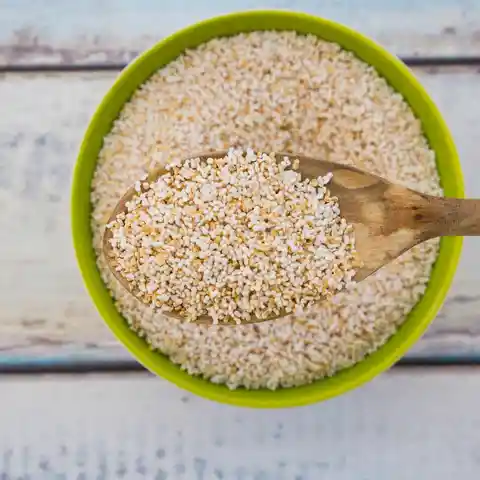
Amaranth seeds are often compared to another, more popular pseudocereal, quinoa. Both are smaller than a grain of rice, but amaranth seeds, at about a millimeter wide, are even smaller than quinoa and have a light tan color. Cooked amaranth seeds have a deliciously earthy, nutty, and toasty flavor, almost like peanut butter. Texturally, amaranth seeds give you a little pop as you bite down.
Amaranth seeds pack a solid amount of protein, roughly double that found in healthy whole grains such as brown rice, oats, and whole wheat. The USDA cites amaranth seeds as having the following macronutrients for a 100-gram cooked serving (about a quarter-cup), all of which are comparable to quinoa:
Amaranth seeds also have phytochemicals and are , manganese, and phosphorous. Another plus is that, because amaranth isn't a grain, it doesn't have gluten, making it a viable option for those seeking a grain-like ingredient to sub for barley or wheat.
Amaranth greens can prove trickier to find than its seeds, but they're becoming more common at farmers' markets, partly due to their love for spreading wild. Today, they're most commonly used in East and South Asian cuisine.
East and South Asian
"The best way to get amaranth leaves is to plant them yourself," Bergo says. "They grow aggressively but are easy to control." Short of gardening, he suggests looking for amaranth leaves at Mexican and other ethnic markets:
"Amaranth's large tender leaves are too tough to eat raw," admits Bergo, so he typically serves them steamed, blanched, or boiled. They shine with a little bit of fat and heat. Simply sauté the greens in garlic and olive oil, and perhaps add some water to help the thin stems soften. Once done, they make a great side and a nice sandwich topping.
"I don't find the taste appealing raw, but the exception is burgundy before flowering," Bergo continues. "Burgundy amaranth is usually grown as an ornamental, but its tiny, tender leaves taste great in a salad."
To experiment with raw amaranth greens in a salad, look for younger, more tender leaves and treat them like you would kale, adding acidity -- citrus juice, vinegar, or a vinaigrette -- to soften them.
Bergo
There are many cultivated forms of amaranth, with leaves that vary from solid green to green and red to solid red, purple, and yellow. Their leaf shape varies, too, and are so attractive they're listed among ornamental garden plants grown for their striking appearance.
Amaranth greens are a joy -- like broccoli rabe without the bitterness -- and pack a rich green depth, like spinach. "Amaranth has a strong swampy taste. I like the flavor in the right place," says Bergo, adding, "I would eat the greens every day."
Nutritional highlights for amaranth leaves are that they're low in calories and high in fiber. The USDA cites amaranth leaves as having the following macronutrients for a 100-gram cooked serving (about ¾ cup), all of which are comparable to spinach:
Amaranth leaves are a significant source of , important for eye and skin health; vitamin C, which plays a vital role in the immune system; and , an essential nutrient for bone health and blood clotting. They're also particularly high in calcium, copper, magnesium, manganese, and potassium.
a traditional food around the world for thousands of years.
The wider picture
Every region has its own idea of what counts as in season, and those definitions rarely line up neatly with national distribution.
Key takeaways
- Though often overlooked in American kitchens, amaranth has global roots and is gaining popularity for its rich flavor, adaptability, and health benefits
- Amaranth is unique in that it has two parts that taste good: leaves and seeds
- "Amaranth is an edible weed," says forager-chef Alan Bergo, "a highly nutritious leafy green vegetable related to quinoa." The leafy plant grows quickly and thrives in hot, dry climates
- Bergo describes amaranth as "a traditional food around the world for thousands of years." It was perhaps most widely used as a staple in ancient Mesoamerica among Aztec and Inca civilizations
- "Amaranth is a wonderful edible plant that a lot more people should be cooking with," Bergo insists
Questions worth asking
What should you know about Bergo?
Bergo describes amaranth as "a traditional food around the world for thousands of years." It was perhaps most widely used as a staple in ancient Mesoamerica among Aztec and Inca civilizations.
Why does it matter?
Another plus is that, because amaranth isn't a grain, it doesn't have gluten, making it a viable option for those seeking a grain-like ingredient to sub for barley or wheat.
What happens next?
Amaranth greens can prove trickier to find than its seeds, but they're becoming more common at farmers' markets, partly due to their love for spreading wild.
All told
Every change in the produce section eventually reaches the same test, which is whether people keep choosing it once the novelty has worn off.