It's the kind of question that pulls you toward dense canopies, remote archipelagos, and climates that exist almost nowhere else on earth.
Some fruits cling to survival in a single valley. Others ripen for just a few weeks before vanishing until the next season.
Rare fruits exist at the intersection of biodiversity, geography, and time, and the story behind each one runs deeper than the fruit itself.
What you're about to uncover is equal parts natural history and wonder.
Rarity in the fruit world is rarely just one thing. It builds, layer by layer.
Some fruits are rare because they grow in geographic isolation, locked inside a single forest or island with no equivalent habitat elsewhere.
Others are climate-sensitive to the point of fragility, dependent on conditions so precise that even a shift in rainfall can ruin an entire season.
Short harvest windows, near-zero commercial viability, protected or endangered status, and, in some cases, deep cultural or sacred restrictions all contribute.
When several of these factors overlap, a fruit doesn't just become rare. It becomes irreplaceable.
Some fruits have never seen a grocery store shelf. Others exist in such fragile ecosystems that tasting one feels less like eating and more like witnessing something.
Here are the rarest fruits on the planet, each with a story worth knowing.
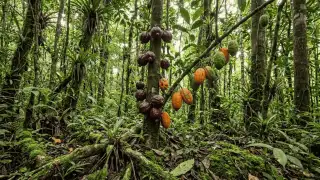
Jabuticaba grows straight out of its trunk, not from branches, which already makes it unlike anything else. The fruit is deep purple, almost black, and tastes somewhere between a grape and a plum.
Its shelf life is brutally short, fermenting within days of harvest, which is exactly why it rarely travels far from where it grows.
Southeast Asia
Called the Queen of Fruits, the mangosteen has earned that title. The white segmented flesh inside its thick purple rind is floral, tangy, and quietly complex.
Strict agricultural import restrictions kept it out of the United States for decades, and its sensitivity to cold makes cultivation outside tropical zones nearly impossible.
Buddha's Hand is almost entirely rind. The fruit splits into long finger-like segments, contains little to no pulp or juice, and smells powerfully of fresh lemon zest.
It holds deep religious significance across Buddhist and Hindu traditions, used as an offering and a symbol of happiness. In kitchens, its zest goes into desserts, cocktails, and perfumes.
Ackee is one of the few fruits that can be genuinely dangerous. Eaten before it naturally opens, the fruit contains hypoglycin A, a toxin that causes severe illness.
Once ripe and properly prepared, though, the creamy yellow flesh is mild and buttery, most famously paired with saltfish in Jamaican cuisine.
Durian's reputation arrives before it does. Banned from hotels, airports, and public transit across much of Southeast Asia because of its aggressive odor, it remains deeply beloved in the region.
While the common varieties are more accessible, certain wild durian cultivars found deep in Borneo's forests are extraordinarily rare, harvested by few and tasted by even fewer.
Rambutan's hairy red and green shell looks more like a creature than a fruit. Inside, the translucent white flesh is juicy and sweet, closely related to lychee but with a slightly creamier texture.
It grows in humid, low-altitude tropical climates and rarely survives the journey outside its growing regions in good condition, making fresh rambutan a regional privilege.
Salak earns its nickname, snake fruit, from the reddish-brown scaly skin that wraps tightly around its flesh. Inside are dry, crunchy segments with a flavor that shifts between sweet, sour, and astringent depending on the variety.
It's deeply embedded in Indonesian food culture but remains largely unknown beyond Southeast Asia.
Miracle fruit contains a glycoprotein called miraculin that binds to taste receptors and makes everything sour taste intensely sweet for up to an hour after eating it. Lemons taste like candy. Vinegar tastes like juice.
The details that count
Scientists have explored its potential as a natural sugar substitute, but its extremely short shelf life keeps it far from mainstream markets.
Mark Twain once called cherimoya the most delicious fruit known to men. The custard-like flesh is sweet, floral, and faintly tropical, tasting of vanilla, banana, and pineapple at once.
What keeps it rare is its pollination process, which in the wild depends on specific nocturnal insects, making commercial cultivation painstaking and largely done by hand.
Hala fruit grows on pandanus trees along Pacific coastlines and looks like an architectural pineapple, built from tightly packed wedge-shaped segments.
It holds cultural significance in Polynesian and Micronesian communities, used in weaving, food, and medicine. The fibrous segments can be chewed raw or cooked, but are largely unknown outside their native islands.
Langsat grows in dense clusters along the branches of tall tropical trees. The thin skin peels away to reveal translucent segments, sweet and tangy, with a flavor that's often compared to a mild grapefruit crossed with a grape.
It's intensely seasonal and deteriorates quickly after harvest, which is why it almost never makes it to international markets.
Mangaba is a fruit that practically dissolves the moment it's fully ripe. Found in Brazil's cerrado and coastal regions, it has a creamy, slightly tangy flesh with a perfumed sweetness that's difficult to describe and even harder to preserve.
Local communities have harvested it for generations, but its fragility makes any kind of commercial export nearly impossible.
Cupuaçu is a close relative of cacao, and its creamy white pulp has a flavor that lands somewhere between chocolate and tropical fruit.
It's used in juices, ice creams, and cosmetics across Brazil, and the beauty industry has taken a strong interest in its seed butter. Outside South America, though, it remains largely under the radar.
Pulasan looks almost identical to rambutan but tastes noticeably sweeter with less acidity. The seed is also edible raw, which sets it apart.
It's cultivated in limited quantities across Malaysia and Thailand and rarely appears even in regional export markets. For most people outside Southeast Asia, pulasan remains a fruit they've simply never had the chance to encounter.
Polynesian and Micronesian
The African horned cucumber, also called kiwano, looks like something out of a science fiction set. Its bright orange shell is covered in thick spikes, and the interior is a vivid green jelly packed with seeds.
The flavor is mild, watery, and faintly citrusy. While it occasionally appears in specialty grocery stores, fresh and wild-harvested versions remain a rarity.
Black sapote has earned its nickname, the chocolate pudding fruit, with good reason. When fully ripe, the dark brown flesh turns soft and rich, with a flavor and texture strikingly similar to chocolate mousse.
It's naturally sweet with nothing added, which makes it an intriguing ingredient. Its extremely short window of peak ripeness, however, makes distribution a logistical challenge.
Soncoya belongs to the same family as soursop and cherimoya, but gets far less attention. The rough, dark exterior opens to reveal orange-yellow flesh that's fragrant, fibrous, and sweet with a faint tartness underneath.
It grows in dry tropical forests and is consumed almost entirely within the regions where it's found, with virtually no presence in international trade or mainstream awareness.
Rare fruits rarely come to you. You go to them, and sometimes the search itself becomes part of the experience.
Specialty grocery stores in cities with large Southeast Asian or Latin American communities are often the most accessible starting point.
Farmers' markets in tropical regions like Hawaii, Florida, or Queensland occasionally surface what no supermarket will stock.
Botanical gardens bring you closer to seeing these fruits alive and in context. Online exotic fruit sellers have quietly changed the game for the more elusive varieties.
And for the rarest of all, travel remains the most honest answer.
The price of a rare fruit is really the price of everything it took to get it to you. Supply is limited by nature, not by choice, and no amount of demand changes the size of a single valley's harvest.
Import and export regulations add another layer, with many fruits restricted or banned outright across borders due to agricultural biosecurity laws. Their shelf life gives distributors almost no margin for error.
Southeast Asian
And the harvesting itself is rarely mechanical; most of these fruits are picked by hand, in remote locations, during windows that last only weeks.
The cost reflects all of it.Surprisingly, some rare fruits are more growable at home than their reputation suggests. What matters most is understanding what each plant actually needs before committing.
Starting small with one or two adaptable varieties is far more rewarding than overreaching. Rare fruits grown at home may never rival their wild counterparts, but the process of growing them carries its own kind of satisfaction.
Rare fruits are not just botanical curiosities.
Many carry nutritional profiles that common grocery store fruits simply cannot match, shaped by the same extreme environments that make them so difficult to find.
The rarest fruit in the world is not a single answer. It shifts depending on where you are, what season it is, and how far you are willing to go.
What stays constant is what these fruits represent: ecosystems worth protecting, agricultural traditions worth preserving, and flavors that exist nowhere else on earth.
Each one is a small argument for biodiversity, made quietly and without fanfare.
If any of these fruits have crossed your path or your plate, we would love to hear about it. Drop your experience in the comments below.
Rare fruits grown at home may never rival their wild counterparts, but the process of growing them carries its own kind of satisfaction.
At a glance
- What you're about to uncover is equal parts natural history and wonder
- Rarity in the fruit world is rarely just one thing
- Some fruits are rare because they grow in geographic isolation, locked inside a single forest or island with no equivalent habitat elsewhere
The bottom line
How this plays out in the produce section will take time to become clear. For now it is a development worth following rather than judging.