* Rutgers Health study examines ultra-processed food marketing in Newark
* Mothers photographed 800+ examples in stores and restaurants
* Study highlights impact of kids' menu marketing and packaging
* Findings come as NJ lawmakers weigh healthy kids' menu legislation
Newly released research from Rutgers Health is prompting fresh scrutiny of how food is marketed and sold in urban areas of New Jersey. While ultra-processed foods, like chicken nuggets and macaroni & cheese, are considered go-to meals for kids in the U.S., the study found that parents' perceptions of those foods and whether it's the best option for their little ones can change in a flash - literally.
As part of a four-month experiment in Newark, mothers of preschoolers were given cameras to snap pictures of food that is readily available at supermarkets and restaurants in their community. Of the 814 photographs submitted, the vast majority showed how prevalent ultra-processed foods are on the shelves of stores and menus of restaurant chains.
After taking pictures and participating in focus groups and a nutrition education session, mothers began questioning the commonness and marketing of ultra-processed foods and discussing the need for change.
The findings of the study were published in the March 12 edition of medical journal Preventing Chronic Disease. It was funded by Rutgers Equity Alliance for Community Health, with support from the Robert Wood Johnson Foundation, as part of an ongoing push to improve health in underserved New Jersey communities.
The research was also the subject of a public art exhibit held in December 2024 at The Leaguers Inc., a nonprofit social services organization in Newark that provides Head Start preschool for thousands of underserved families.
Eye-opener"We chose Newark because it's such a vibrant community and it's an ideal launch point to tackle the food environment challenges head on," said Pamela Rothpletz-Puglia, professor at Rutgers School of Health Professions and an author of the study.
"We wanted an area with a lot of ultra-processed food - which isn't hard to find. Also, we have a longstanding academic community partnership with The Leaguers that really enabled us to do this project well. Newark has diverse families, and it's a tough foodscape, and we had a perfect partner in The Leaguers to do it.
"The mothers went from being passive consumers to consumers who questioned the choices they are being given at the market and elsewhere in the community," said Rothpletz-Puglia. She added that the study shows the potential for participatory methods of research in which participants are given the tools to analyze their surroundings to evoke grassroots advocacy for change.
"The idea for the study came from my frustration with a core contradiction in how we feed kids: we normalize ultra-processed junk like nuggets, fries and sugary drinks, then expect healthy eating later. We're socializing generations this way. Kids' menus illustrate it perfectly -- some have improved, but most still push the same processed staples," said Rothpletz-Puglia.
"And the 800 plus images really exposed the junk and ultra processed foods dominance, sparking these vital questions like, why are our kids surrounded by this? And so, really, it's a direct strike against our acceptance of ultra processed foods dominance. We feed kids junk, expect miracles later," she said.
Appealing to kids
"They saw how foods like sugary cereals and drinks, chicken nuggets, French fries and packaged foods are designed to appeal to young children and are aggressively marketed in brightly colored packaging placed at children's eye level. They also began to examine ingredient lists and to comment on the number of fast-food opportunities compared to fewer healthier food restaurant opportunities," she explained.
Alliance for Community Health
As part of her work, Rothpletz-Puglia regularly studies how social, cultural and environmental factors influence childhood nutrition. Her research draws on decades of clinical experience, including a background in pediatric HIV, and using community-based research methods to address health inequities.
According to the U.S. Centers for Disease Control and Prevention, young people ages 1 to 18 consume about 61.9% of their daily calories from ultra-processed foods and beverages that are high in sodium, additives, sugar or unhealthy fats.
The aggressive marketing combined with the fact that these foods are highly palatable can dissuade children from new food. That habit can then continue into adulthood, increasing lifetime risks like obesity and chronic disease, a study published in scientific medical journal Appetite found.
Forming healthy habits
"In moderation, chicken nuggets are fine. But how is it that we've created this normalization of this kind of food for our kids and then we expect them to be like healthy eaters when they're adults? It makes no sense," Rothpletz-Puglia said.
"What's really going to advance that is that there's some research showing the financial ability to do it. The food industry isn't just going to be philanthropic. I'm not being derogatory of the food industry, but it's profit driven. And so in order to meet them where they're at, work needs to be done to show that they won't lose money," she said, adding, "And there is actually some research out there showing that they don't lose profit when they shift up the menus."
[T]here is actually some research out there showing that [companies] don't lose profit when they shift up the menus.
- Pamela Rothpletz-Puglia, professor, Rutgers School of Health Professions
"In reality, children don't need different foods than adults do, except for portion size and texture for kids under 2," Rothpletz-Puglia said. "Why do we even have children's menus except for portion sizes? And why are they so different from the way that adults' menus look?
"We have found it actually traces back to Prohibition. In 1919, when alcohol was prohibited, the hospitality industry needed to make up for that lost revenue. At the time, children did not go out to dinner, but they created this market. Since alcohol wasn't allowed, it became much more child friendly to take kids out for dinner. And then these children's menus were created," she said.
After the Green Revolution transformed agriculture during the mid-20th century, food production increased dramatically worldwide. "We were able to mass-produce food, which is amazing because we can feed lots of people and so forth. But, it also means we can create food very inexpensively - especially ultra-processed food. And that's when our portion sizes tripled. And when advertising started - particularly advertising toward children and urban landscapes - it created this perfect storm where kids' foods sort of became like a norm," Rothpletz-Puglia said.
A (photo)voice for change
Because photography involves active observation of the environment, Rothpletz-Puglia believes it helped make learning more personally relevant for the experiment.
Photovoice is a research method in which community members identify and record issues by taking photographs, participating in dialogue about the problems and disseminating the work to policymakers and other stakeholders. According to Rothpletz-Puglia, the purpose of the study was to examine how participation in a photovoice project and education on ultra-processed foods influenced mothers' perceptions and evaluations of their local food environment.
"The photos far exceeded our expectations and seeing the food environment through their own eyes made it really undeniable this prevalence of ultra-processed food. It also really screamed the truth that ultra-processed junk, sugary cereals, nuggets, fries and eye-level cover packaging is omnipresent. It's really shadowing kids everywhere," she said, adding, "It really confirmed the food environment is stacked against healthy child feeding."
Rothpletz-Puglia
"None of this is about blaming parents. It's all about how we need to make some systemic changes. It's on us as a culture to make it easier for people to eat healthy foods," Rothpletz-Puglia explained.
She recalled how one mom sat in a wheelchair "and went through the grocery store so that she could see it from her child's height."
"She said she couldn't believe it. She submitted 40 photographs of things that were targeting and that shows a level of inquiry that's real critical awareness," Rothpletz-Puglia said.
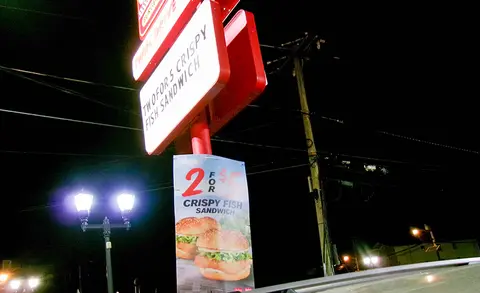
Another participant captured a picture showing a two-for-one deal at a fast-food joint. That was taken by a mother who just picked up her kids after a long day at work, according to Rothpletz-Puglia. "She said she knew she'd save money if she stopped there as opposed to going to the grocery store. And the discussion among the mothers was that everyone could relate to that. We've all done that," she said.
Fresh takes"We hoped that the discussions would spark immediate awareness and it did ... They zeroed in on the predatory tactics of child-targeted ads and eye-level colorful junk food packaging. Many countries regulate that, but we don't. So, there were questions like, 'Why is this everywhere?'" Rothpletz-Puglia said.
"It may light the fuse for potential grassroots advocacy. But, practically speaking, changing the world takes a long time, right? It took us 70 years for women's suffrage, so things like this take time," she said.
"But they also brainstormed practical workarounds, which was another thing that was so unexpected and so beautiful about this," she said. "The mothers talked about affordable, practical workarounds for healthy meal ideas. So, this had a dual impact -- they questioned the broken system today and also built family resilience until policy catches up ... it's grassroots awareness plus family hacks, and that's real change."
Another suggestion from the mothers called for shopping at local businesses and farmers' markets, where there's less direct advertising than large grocery chains and more opportunities to purchase fresh food.
"They actually took photographs demonstrating what they perceived as a difference in freshness from the local fish shop compared to the box supermarket. So, their perceptions were that food was fresher, but it's more expensive, so they can't always do that."
"Parents value small businesses and want to be able to shop if the prices are more competitive. If they had their choice, that's where they would go. But they couldn't do that all the time ... I think that if there were tax breaks or some sort of incentives for small businesses to help them be more lucrative so that they could lower prices."
According to Rothpletz-Puglia, another interesting aspect of the project regarded cultural foodways. Immigrant parents from Afro-Caribbean backgrounds often described healthier, home-cooked diets than typical American eating patterns, and the study found that sharing those cultural food traditions helped families learn from one another and encouraged healthier ways of feeding children, she said.
A sweet escape
What you need to know
Rothpletz-Puglia hopes there will eventually be less advertising targeting kids. "I think that's something that we need to be more cognizant of is really thinking about that and the impact it has. We really are socializing our kids to eat that food," she said. "One of the moms, as an experiment, turned her four kids loose in the supermarket and wanted to see what they'd choose first. Every single child chose an ultra-processed food with a colorful, popular character on it.
"The targeted marketing for unhealthy foods is really hard for parents to navigate because it's so prevalent. You can't get away from it," she said.
At supermarkets, shelves are filled with products high in sugar, fat or salt that are wrapped in kid-friendly packaging featuring bright colors, cartoon characters and games. A 2019 study found that 93% of prepackaged food products marketed to kids are considered unhealthy by the World Health Organization's nutrient standards.
The targeted marketing for unhealthy foods is really hard for parents to navigate because it's so prevalent. You can't get away from it.
- Pamela Rothpletz-Puglia, professor, Rutgers School of Health Professions
While several European countries restrict child-targeted marketing on food packaging and ban cartoons, games and promotional characters on products that are considered unhealthy, the U.S. has no federal limits and relies on voluntary industry guidelines.
Rothpletz-Puglia said, "I'd like to see some regulation around that ... and it would nice if, on their own accord, they would make an effort not to target children for that type of food."
Because ultra-processed foods are engineered to taste good, simply adding healthier options won't automatically change eating habits. But, increasing those choices and reducing constant exposure to unhealthy foods could make healthier decisions easier, she believes.
"Some of the moms did talk about how they planned to prepare a meal at home, but on the way home the kids saw Burger King, McDonald's or whatever. And then when they got home, they were like, 'Why do we have to eat this?'... It's just so prevalent that it's really hard to get away from - especially in an area like Newark. Where these families live, everywhere they turn and walk down the street, you can't get away from it."
Balanced bitesThe Rutgers Health study comes as New Jersey lawmakers consider a measure that would require restaurant chains with more than 20 locations statewide to ensure there's at least two healthy options for kids on the menu.
State Sens. Joe Vitale, D-19th District, and Angela McKnight, D-31st District, introduced the bill earlier this year.
Commenting on the proposal, Vitale said, "In New Jersey, nearly 1 in 3 children is overweight or obese, putting them at higher risk for serious health conditions both now and later in life. When families eat out, they should be able to trust that children's meals are not undermining their kids' health."
Angela McKnight D-31st District
"This bill sets reasonable, science-based standards that support parents, promote healthier choices, and help establish balanced lifelong eating habits for our children," he said.
Not making the grade
A recent analysis by the Center for Science in the Public Interest found that about 72% of kids' meals at top U.S. restaurant chains fail to meet basic nutrition standards. The report said options were too high in calories, sodium, fat or sugar.
Industry data show that dining out remains common for many families due to convenience and cost. According to Business Insider, about 80% of parents said they order takeout or bring their kids out to eat at least once a week.
In response to advocacy from groups like the American Heart Association and Robert Wood Johnson Foundation, about two dozen cities and counties across the U.S. have implemented guidelines requiring eateries to offer healthier default beverages and at least one kids' meal that meets nutrition standards.
Some bigger chains have unveiled a mix of menu changes and voluntary programs, too. For instance, McDonald's and Wendy's replaced sugary drinks with water, milk or 100% juice as default options in many markets. And several brands, including Burger King, Chipotle Mexican Grill, First Watch and Subway, participate in initiatives such as the National Restaurant Association's Kids LiveWell program to highlight healthier options.
Compliance, impact vary
Still, research shows that sugary drinks and fried sides often remain available -- unless customers specifically request alternatives. That means compliance and impact can vary widely across restaurants, according to an analysis by the Institute of Food Technologists.
Gov. Gavin Newsom ultimately vetoed legislation requiring more wholesome meals for kids in California last fall amid concerns it "regulates restaurants in a way that is unnecessary and overly burdensome."
New Jersey Restaurant and Hospitality Vice President of Public Affairs Amanda Stone recently told NJBIZ her organization "supports the goal of expanding healthy kids' options, and many of our members are already doing this - voluntarily."
"As the bill moves forward, it is important that any requirements remain practical and flexible so restaurants can continue serving families without added operational strain," she said.
Stone also said, "We would love to see this be a voluntary program instead of another mandate on small businesses.
We chose Newark because it's such a vibrant community and it's an ideal launch point to tackle the food environment challenges head on.
What to remember
- Newly released research from Rutgers Health is prompting fresh scrutiny of how food is marketed and sold in urban areas of New Jersey
- As part of a four-month experiment in Newark, mothers of preschoolers were given cameras to snap pictures of food that is readily available at supermarkets and restaurants in their community
- The findings of the study were published in the March 12 edition of medical journal Preventing Chronic Disease
The bottom line
Every change in the food industry eventually reaches the same test, which is whether people keep choosing it once the novelty has worn off.