
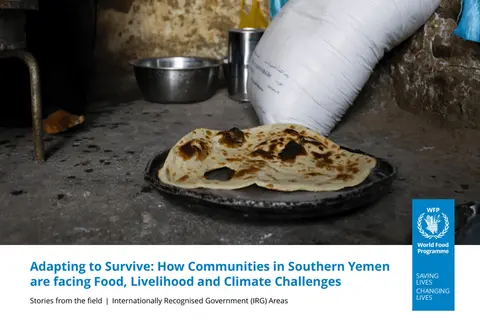
Yemen continues to endure a severe humanitarian crisis, with millions of people grappling with widespread food insecurity and high levels of malnutrition. The protracted conflict and economic collapse remain the primary drivers undermining food security and livelihoods. These pressures are further compounded by climate change and the growing frequency of extreme weather events, which disrupt agricultural productivity, damage critical infrastructure, and erode household resilience.
Households in areas under the control of the Internationally Recognized Government (IRG) report a sharp decline in their ability to access sufficient and nutritious food. Over 52% of the population are projected to face high levels of food insecurity in the period ending December 2025, with acute food insecurity expected to remain critical in the short-to-medium term, as reported by the latest IPC report released in June 2025 (Link). During the reporting period, the humanitarian crisis was further compounded by escalating regional tensions including the conflict in Gaza and Houthi attacks on commercial shipping in the Red Sea that intensified security concerns, further complicating and disrupting supply chains, humanitarian operations and exacerbating the vulnerability of communities under IRG control.
Internationally Recognized Government
Compounding these challenges were the inflationary pressures and the continued depreciation of the Yemeni Rial. The exchange rate plummeted from YER 2,071 per USD in January 2025 to about YER 2,806 by June 2025, with this rapid depreciation severely eroding households' purchasing power, driving up the cost of living, and placing further strains on already vulnerable populations.
Furthermore, Yemen's diverse topologies expose its various zones to an increasing frequency of weather- related shocks . The country has shifted from experiencing occasional events to enduring recurrent cycles of extreme weather, including floods, droughts, heatwaves, storms, and coastal erosion.
Yemeni Rial
These challenges have also contributed to population displacement over the years, albeit at reduced scale in 2025. Despite displacement triggers reducing, IDP population in IRG rose to about 3.06 million in 2025, according to IDP Assessment Round 40, with Ma'rib governorate still hosting the largest share of IDPs. Ma'rib Governorate's location on the front line between warring factions experience influxes from other governorates. It has become a key destination for IDPs due to perceived availability of essential services and job opportunities.
Vulnerable groups such as women, children, the elderly and internally displaced persons (IDPs) live in IDP sites/camps experience these challenges in varying and often more severe ways. Consequently, households are being forced to adopt a range of coping mechanisms to deal with disruptions to their ability to earn a living in rural and urban settings, in order to provide consistent and nutritious supply of food for their families.
Where this fits
For all the noise around launches and policy shifts, the pattern that matters most is repetition: one company acts, others follow, and eventually the exception becomes the rule.
The short version
- Yemen continues to endure a severe humanitarian crisis, with millions of people grappling with widespread food insecurity and high levels of malnutrition
- Households in areas under the control of the Internationally Recognized Government (IRG) report a sharp decline in their ability to access sufficient and nutritious food
- Compounding these challenges were the inflationary pressures and the continued depreciation of the Yemeni Rial
By the numbers
- YER 2,071 per USD in January 2025 to about YER 2,806 by June 2025, with this rapid depreciation severely eroding
- These challenges have also contributed to population displacement over the years, albeit at reduced scale in 2025
What people ask
What should you know about Internationally Recognized Government?
Households in areas under the control of the Internationally Recognized Government (IRG) report a sharp decline in their ability to access sufficient and nutritious food.
What happens next?
Yemen continues to endure a severe humanitarian crisis, with millions of people grappling with widespread food insecurity and high levels of malnutrition.
The bottom line
The details will firm up over the coming months. What is already clear is that this is unlikely to be the last we hear of it.