Many snacks give quick energy, but not all of them help you feel satisfied until your next meal. A handful of crackers, a sweet bar, or a plain piece of fruit can be useful in the right moment, but these options may not always have enough staying power on their own.
Learning how to build balanced snacks can make everyday snacking more practical. The goal is not to create a perfect snack every time. It is to understand which simple food pairings usually make snacks more filling, more balanced, and easier to use in real life.
Balanced snacks often work best when they combine more than one nutrition job: quick energy, fullness, texture, flavor, and staying power. For many people, that means pairing protein with fiber-rich carbohydrates and, when helpful, a small amount of fat.
This guide is for general nutrition education only. Hunger patterns vary by person, schedule, sleep, training, medications, health conditions, and individual needs. If you have diabetes, a history of eating disorders, kidney disease, digestive conditions, food allergies, or specific medical nutrition needs, personalized guidance from a qualified professional may be appropriate.
Quick AnswerTo build a balanced snack that keeps you full longer, combine a protein source with a fiber-rich carbohydrate and, when helpful, a small amount of fat. This type of snack tends to be more satisfying than a carb-only option because it supports steadier energy, slows digestion, and helps reduce hunger returning too quickly.
What Makes a Snack Feel Filling?A filling snack is not just about calories or size. It is about how the foods work together. Some snacks are light and quick, while others are more useful when there is a long gap between meals, a busy workday, or an active schedule.
Protein Supports Fullness
Protein is often the anchor of a satisfying snack. Greek yogurt, cottage cheese, eggs, tofu, edamame, tuna, cheese, hummus, and roasted chickpeas can all help make a snack feel more complete.
This does not mean every snack must be high protein. It simply means many people feel more satisfied when snacks include a meaningful protein source rather than only quick-digesting carbohydrates.
Fiber Adds Volume and Slower Energy
Fiber-rich foods add bulk and texture. Fruit, vegetables, oats, beans, lentils, popcorn, whole grain crackers, and seeds can help a snack feel more substantial without making it complicated.
Fiber-rich carbohydrates are especially useful because they provide energy while also helping the snack last longer than refined carbs alone.
Fat Adds Staying Power and Satisfaction
Healthy fats can make snacks more enjoyable and satisfying. Nuts, seeds, nut butter, avocado, cheese, olive-based dips, and tahini can add flavor and staying power.
Fat is useful, but portion still matters. A small amount can be enough to make a snack feel more complete.
Food Form and Portion Matter Too
A smoothie, a handful of nuts, and a yogurt bowl can all be balanced, but they may feel different in the body. Chewing, volume, texture, and portion size can influence how satisfying a snack feels.
The Simple Balanced Snack Formula
Snack Feel
The easiest way to make balanced snacks is to use a simple formula:
Protein + fiber-rich carbohydrate + optional fat or texture = a more satisfying snack.
This formula is flexible. You can use it at home, at work, after exercise, while studying, or when you need something portable.
Step 1: Start with Protein
Choose one protein anchor first. This may be yogurt, cottage cheese, eggs, tofu, tuna, hummus, edamame, cheese, or roasted legumes.
Step 2: Add Fiber-Rich Carbs
Add fruit, vegetables, oats, popcorn, whole grain crackers, or another fiber-rich option. This gives the snack energy and volume.
Step 3: Add Fat or Texture If Needed
If the snack still feels too light, add nuts, seeds, nut butter, avocado, or cheese. Crunchy texture can also make snacks feel more satisfying.
Step 4: Adjust to Hunger and Timing
A snack before dinner may be small. A snack before a long meeting, commute, workout, or class may need to be more substantial. The best portion depends on context.
Why Carb-Only Snacks Often Do Not Last
Carbohydrates are not bad for snacks. In fact, carbs are often useful because they provide energy, taste good, and are easy to prepare. The issue is that many carb-only snacks digest quickly and may not provide much fullness.
For example, plain crackers, candy, white toast, pretzels, or a sweet drink may give quick energy but less staying power. That does not make them "bad." It simply means they may work better when paired with protein, fiber, or fat.
For beginners, the better strategy is usually not to avoid carbs. It is to pair them more intentionally. Apple alone may be fine, but apple with peanut butter is usually more satisfying. Crackers alone may be light, but crackers with hummus or cheese can feel more complete.
Balanced Snack Combinations That Actually Work
Balanced snack ideas do not need to be complicated. The best options are usually easy to repeat, easy to adjust, and made from foods you already like.
Fridge-Friendly Snacks- Greek yogurt + berries + nuts: protein, fiber, and fat in one simple bowl.
- Cottage cheese + fruit: creamy, sweet, and filling without much prep.
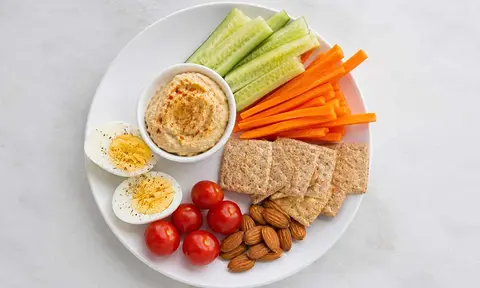
- Hummus + vegetables + whole grain crackers: fiber, crunch, and plant-based protein.
- Hard-boiled eggs + cucumber + toast or fruit: a practical snack for longer gaps between meals.
- Edamame + sliced vegetables: easy plant protein with extra volume.
- Tuna + whole grain crackers: a more filling option when you need something savory.
- Apple + peanut butter: a classic pairing with fiber, fat, and flavor.
- Popcorn + roasted chickpeas: crunchy, fiber-rich, and more filling than popcorn alone.
- Whole grain crackers + nut butter: simple, portable, and satisfying.
- Dried fruit + nuts + seeds: useful for travel, but portion awareness helps.
- Oats + seeds + milk or yogurt: a small overnight-style snack with fiber and protein.
- Roasted lentils + fruit: sweet and savory balance with plant-based protein.
- Cheese + fruit: easy to pack and balanced enough for a busy day.
- Trail mix with portion awareness: nuts, seeds, and dried fruit can work well in a small container.
- Yogurt pot + fruit: convenient and more filling than a sweet snack alone.
- Roasted edamame + whole grain crackers: crunchy, portable, and protein-forward.
- Nut butter packet + banana: useful for travel, work, or study days.
- Protein-rich bar + fruit: a practical backup when fresh food is not available.
For a broader overview of snack options, see our guide to healthy snacks. If you mainly need packaged options, the guide to healthy snacks to buy may be more useful.
How to Build Balanced Snacks for Different Situations
Snacks
For WorkWork snacks should be simple, low-mess, and easy to eat between tasks. Try fruit with cheese, yogurt with nuts, hummus with crackers, or roasted chickpeas with vegetables.
For more office-specific ideas, visit our guide to healthy snacks for work or our workplace-focused page on healthy office snacks.
Before a Long Gap Between Meals
If lunch and dinner are far apart, choose a snack with more structure. A protein anchor plus fiber-rich carbs usually works better than a small sweet snack alone.
Examples include cottage cheese with fruit, eggs with toast, hummus with crackers and vegetables, or Greek yogurt with oats and seeds.
After ExerciseAfter exercise, many people do well with a snack that includes protein and carbohydrates. This could be yogurt with fruit, a smoothie with Greek yogurt, eggs with toast, or edamame with crackers.
The right amount depends on workout intensity, timing, and your next meal.
For Afternoon Energy
Afternoon snacks often work best when they are not just sweet or caffeine-based. A balanced snack can help bridge the gap between lunch and dinner without feeling too heavy.
Try apple with peanut butter, popcorn with roasted chickpeas, cheese with fruit, or vegetables with hummus.
For Late-Night Light Hunger
Late-night snacks can be simple and gentle. If you are actually hungry, options such as yogurt, fruit with nut butter, toast with avocado, or cottage cheese with berries may be useful.
For a dedicated guide, see our page on healthy late night snacks.
Portion Size and "Enoughness"
There is no perfect snack size for everyone. A useful snack should match your hunger, your next meal timing, your activity level, and your personal needs.
A small snack may be enough when dinner is soon. A larger snack may be reasonable when you have several hours until your next meal. The goal is not to follow rigid rules. The goal is to choose enough food to feel steady and satisfied.
It can help to ask: "What does this snack need to do?" If it only needs to hold you for one hour, fruit or yogurt may be enough. If it needs to last three hours, a more balanced combination may work better.
Carbs Bad for Snacks?
If portion sizes feel confusing, our guide to understanding serving sizes can help you think about amounts without turning snacks into a strict numbers exercise.
Store-Bought vs Homemade Balanced Snacks
Both store-bought and homemade snacks can be balanced. Homemade snacks give you more control, but store-bought options are often more realistic for workdays, travel, school, and busy routines.
The key is pairing. A packaged snack may become more balanced when you add fruit, yogurt, nuts, cheese, hummus, or vegetables. For example, crackers alone may not last long, but crackers with cheese and fruit can be much more satisfying.
Convenience is not a problem. The real question is whether the snack helps you feel steady and satisfied. For more practical preparation ideas, visit our healthy grocery shopping guide or explore healthy snack recipes.
Common Mistakes That Make Snacks Less Satisfying
If your main goal is a lighter snack, see our guide to best light healthy snacks. For specific taste preferences, you may also like healthy sweet snacks or healthy salty snacks.
How to Stock Ingredients for Better Snacks
Balanced snacks are easier when your kitchen, desk, or bag has a few reliable building blocks. You do not need a complicated system. A simple snack setup can cover most situations.
- One protein option: Greek yogurt, cottage cheese, eggs, hummus, edamame, tuna, cheese, or tofu.
- One fruit or vegetable: apples, berries, bananas, carrots, cucumbers, peppers, tomatoes, or grapes.
- One crunchy fiber source: popcorn, whole grain crackers, oats, roasted chickpeas, or seeded crispbread.
- One fat or flavor option: nuts, seeds, nut butter, avocado, tahini, or cheese.
- One portable backup: trail mix, roasted edamame, a protein-rich bar, nut butter packets, or shelf-stable crackers.
This makes it easier to build filling balanced snacks without starting from scratch every day.
You can also connect snack planning with your overall meals. For a broader framework, see what a balanced meal looks like.
Balanced Snack Examples by Formula
Here are simple ways to use the formula in real life:
FAQ What Makes a Snack Balanced?A balanced snack usually includes more than one nutrition element. A practical formula is protein plus fiber-rich carbohydrates, with healthy fat added when helpful. This combination can make snacks more satisfying and useful between meals.
What Snacks Keep You Full Longer?Snacks that keep you full longer often include protein, fiber, and some fat. Examples include Greek yogurt with berries and nuts, apple with peanut butter, hummus with vegetables and crackers, or cottage cheese with fruit.
Is Protein the Most Important Part of a Filling Snack?
Most Important Part
Protein is often helpful because it supports fullness, but it is not the only factor. Fiber, fat, portion size, food texture, and meal timing also matter. Many people find snacks more filling when they include a meaningful protein source.
Are Carbs Bad for Snacks?No. Carbs can be useful in snacks because they provide energy and are easy to pair with other foods. The goal is not to avoid carbs, but to combine them with protein, fiber, or fat when you need more staying power.
How Do I Build Balanced Snacks on the Go?Choose portable pairings such as cheese and fruit, trail mix, roasted edamame with crackers, yogurt with fruit, or a nut butter packet with a banana. Keep one protein option and one fiber-rich option available.
What Are Good Balanced Snacks for Work?Good balanced work snacks are easy to store, low-mess, and satisfying. Try Greek yogurt with nuts, hummus with crackers and vegetables, fruit with cheese, roasted chickpeas, or apple with peanut butter.
Can a Store-Bought Snack Still Be Balanced?Yes. Store-bought snacks can work well, especially when paired with a whole-food component. Crackers with cheese, a protein bar with fruit, or popcorn with roasted chickpeas can all be practical balanced options.
How Much Protein Should a Snack Have?There is no universal protein target for every snack. Some people find snacks more filling when they include a noticeable protein source, and some nutrition discussions mention ranges such as 15 to 20 grams. Your needs depend on meal timing, hunger, activity, body size, and health goals.
Final ThoughtsThe best balanced snacks are not complicated. They are practical combinations that help you feel more satisfied between meals. Instead of looking for a perfect snack, start with a simple question: does this snack include protein, fiber-rich carbs, and enough staying power for the situation?
Once you understand the formula, it becomes easier to adjust snacks for work, travel, exercise, late-night hunger, or busy days. Balanced snacks are not about strict rules. They are about making everyday food choices more useful, flexible, and realistic.
What does this snack need to do?
Key takeaways
- Many snacks give quick energy, but not all of them help you feel satisfied until your next meal
- Learning how to build balanced snacks can make everyday snacking more practical
- Balanced snacks often work best when they combine more than one nutrition job: quick energy, fullness, texture, flavor, and staying power
All told
None of this settles the wider question. It does make one thing harder to ignore: the pressure in the snack aisle has shifted, and others will have to respond to it.